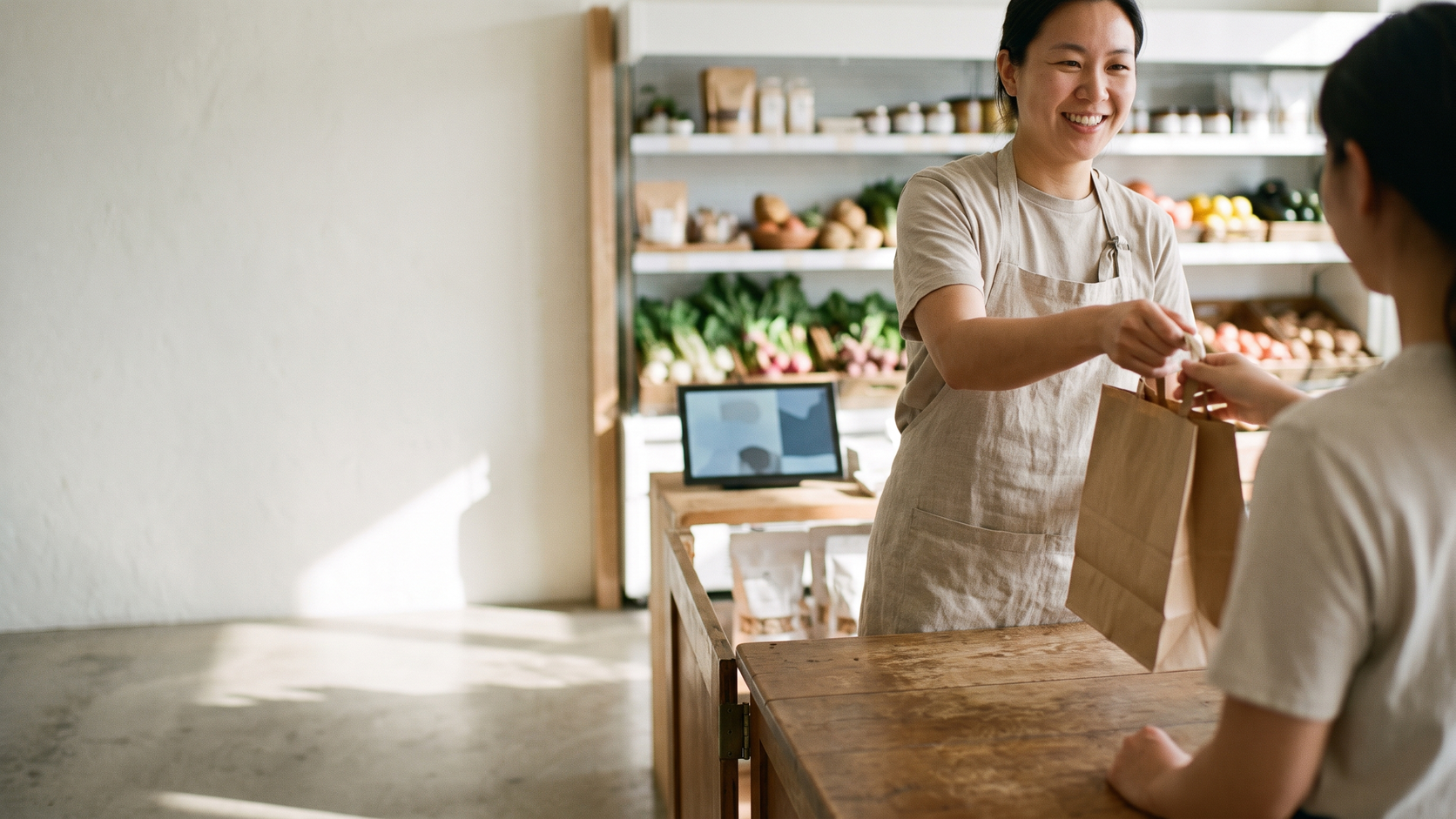
Grocery Ecommerce Where Pickup Is A Real Lane.
Food sells fast, moves locally and is collected as often as it is shipped. Pickup and delivery are order statuses here rather than an afterthought bolted onto a shipping flow, so the counter and the van are part of the same order list.
What Selling Food Needs
Speed of stock and a fulfilment path that is not always a parcel.
Fulfilment
Pickup Is First Class
Local
Out For Delivery
Stock
Counts That Move Fast
Catalog
Weights And Sizes
Automation
Alerts That Fire
Record
One List, Both Lanes
What This Does Not Track.
There is no lot number, batch or expiry date tracking in the inventory models. Nothing records that this case expires in nine days and that one in thirty, and nothing rotates stock by date.
For shelf-stable food, coffee, dry goods and most speciality grocery that is irrelevant. For fresh produce, dairy or anything where FEFO rotation and traceability are the operation, it is a real gap and you should not migrate into it expecting otherwise.
What It Does Instead.
Stock accuracy per variant, threshold alerting that fires as an event, and a fulfilment model that treats collection as a first-class outcome rather than a special case.
That combination fits a shop selling online and over a counter far better than most ecommerce platforms, which tend to assume every order ends in a courier.
It Reads From The Same Records
Questions People Ask
Do you handle expiry dates or lot tracking?
No. There is no batch, lot or expiry field in the inventory models and no date-based rotation. For shelf-stable goods that does not matter. For fresh produce or anything requiring traceability it is a genuine gap, and it is better to hear it now.
Is in-store pickup properly supported?
Yes, and it is the part this platform does unusually well. Ready for pickup and picked up are real statuses, and a collected order counts as fulfilled rather than sitting forever as unshipped.
Can we do local delivery?
Out for delivery is an order status, so a local run is tracked in the same list as everything else. What there is not is route planning or driver dispatch, so the routing itself would be handled outside or built.
How do we know when something is running out?
Below threshold, at zero and restored are all events, so an automation can email a buyer or open a task the moment a line crosses a level you set, rather than a report telling you the next morning.
Do you support products sold by weight?
Sold by size or unit, yes, as variants with their own price and stock. Continuous weight pricing, where the total is calculated from an actual weighed amount at packing, is not built in.
Sell Over The Counter And Online.
Sign up and place a pickup order to see how the lane actually behaves.